Introduction
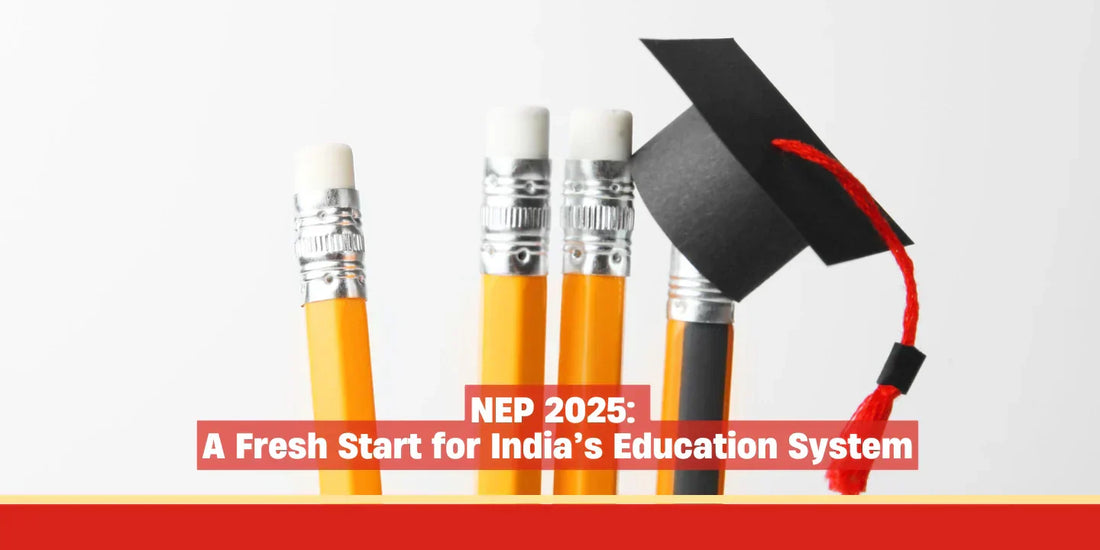
Imagine a classroom where students do not just memorize answers but understand ideas, explore talents, and apply knowledge to solve real-life problems. That is the core vision behind NEP 2025, the New Education Policy that is set to redefine how India learns and teaches.
The policy aims to make learning more flexible, practical, and inclusive, preparing every student for the skills of tomorrow. Let’s break down what NEP 2025 really means, why it matters, and how it will change education for students, teachers, and parents across the country.
What Is NEP 2025?
NEP stands for New Education Policy, and the 2025 version builds on the earlier NEP 2020, with updated reforms for today’s evolving educational needs. It is not just a policy document; it is a roadmap for reimagining the Indian education system from preschool to higher education.
Its guiding question is simple yet powerful:
“Are we truly preparing our children for the future?”
If the answer is no, NEP 2025 seeks to fix that through bold, learner-focused changes.
What Does NEP 2025 Aim to Change?
The goal of NEP 2025 is to transform the entire learning ecosystem by:
- Making education more practical and skill-based
- Encouraging creativity and curiosity over rote learning
- Integrating technology for smarter classrooms
- Offering flexible subject choices instead of rigid streams
- Promoting inclusion so that no child is left behind
Revolution in School Education: The 5+3+3+4 System
The old 10+2 system is being replaced by a modern and flexible 5+3+3+4 structure, designed to align education with the developmental stages of a child.
The New Structure Explained
| Stage | Age Group | Grades | Focus Area |
|---|---|---|---|
| Foundational Stage | 3–8 years | Preschool to Grade 2 | Play-based learning, foundational literacy & numeracy |
| Preparatory Stage | 8–11 years | Grades 3–5 | Activity-based learning, introduction to basic concepts |
| Middle Stage | 11–14 years | Grades 6–8 | Critical thinking, coding, and hands-on projects |
| Secondary Stage | 14–18 years | Grades 9–12 | Multidisciplinary learning, flexibility in subjects, career readiness |
Key Changes for Students
- Learning will be interactive and project-based, not textbook-driven.
- Students can learn coding, design, and entrepreneurship from Class 6.
- They can mix subjects like Science with Music or Math with Art.
- Report cards will focus on skills, growth, and behavior, not just marks.
Teachers Become Mentors, Not Just Instructors
NEP 2025 recognizes that teachers are the heart of education. It aims to transform the teaching profession into one of the most respected and rewarding careers.
Major Reforms for Teachers:
- Regular training programs to keep teachers updated with new methods.
- Emphasis on mentorship and guidance, not rote instruction.
- Smaller class sizes for better individual attention.
- Use of digital tools to personalize learning and track student progress.
A teacher’s role will evolve from explaining lessons to inspiring curiosity and lifelong learning in every student.
Flexible and Dynamic Higher Education
One of the most exciting aspects of NEP 2025 is the freedom and flexibility it brings to college education.
Multiple Entry and Exit Options
Students can now choose how long they want to study and still earn recognition:
- 1 Year: Certificate
- 2 Years: Diploma
- 3 Years: Bachelor’s Degree
- 4 Years: Bachelor’s Degree with Research
This ensures students who take breaks for personal or financial reasons can rejoin without losing progress.
Mix and Match Subjects
Under NEP 2025, rigid subject combinations will become a thing of the past. Students can study Economics with Dance, Physics with Photography, or Chemistry with Business Studies.
The idea is to mirror real life where knowledge is interconnected and creativity thrives.
Simplified Admission Process
The policy introduces a common national entrance test for undergraduate admissions, reducing the stress of multiple entrance exams and bringing transparency to the process.
Technology: The New Teaching Partner
The COVID-19 era showed the importance of digital learning. NEP 2025 builds on that momentum by using technology as a teaching ally.
Key Technological Changes:
- Smart classrooms with interactive content
- AI-based learning tools that adapt to each student’s pace
- Online courses for supplementary learning
- Educational material in regional languages to ensure inclusion
This integration ensures that even students in remote areas can access quality education.
Learning in Your Own Language (and English Too)
NEP 2025 emphasizes the importance of mother tongue-based learning.
Students will be taught in their home language or regional language up to Grade 5, ensuring better understanding and emotional connection. English and other languages will continue as secondary options.
Research shows that children learn faster and think more creatively when taught in their native language.
Inclusion and Equity: Education for All
NEP 2025 has a strong social mission to make education accessible to every child, regardless of background.
Steps Toward Inclusion:
- Increased scholarships for underprivileged children.
- Support for girls, children with disabilities, and tribal students.
- Free access to digital devices and study materials.
- Mid-day meals and financial aid to reduce dropouts.
Education will no longer be a privilege; it will be a right accessible to all.
New Approach to Exams and Assessments
Gone are the days when a student’s worth was defined by a single exam. NEP 2025 introduces continuous and comprehensive assessment.
What Changes:
- Multiple smaller evaluations instead of one final test.
- Peer and self-assessments to promote accountability.
- Focus on creativity, teamwork, and problem-solving rather than memorization.
- Marks will still matter, but skills and values will count equally.
This will reduce exam-related anxiety and encourage learning for understanding, not just scoring.
Parents and Communities as Partners in Learning
NEP 2025 encourages active participation from parents and local communities.
- Parents will receive regular updates through school apps and meetings.
- Schools will collaborate with community leaders to address local educational challenges.
- Learning will extend beyond classrooms through community projects and real-world problem-solving.
Education will become a shared mission involving teachers, parents, and society together.
Rooted in Indian Values, Ready for the Global Future
NEP 2025 blends the wisdom of Indian traditions with modern global education trends.
Indian Knowledge Systems: Yoga, Ayurveda, Sanskrit, and moral values
Global Readiness: Coding, AI, data science, robotics, finance, and entrepreneurship
This dual approach will create students who are proudly Indian yet globally competent.
Challenges Ahead
While NEP 2025 is visionary, its success depends on effective execution. India will need:
- Well-trained teachers
- Adequate infrastructure and digital resources
- Support from state governments
- Active involvement of parents and local bodies
The journey may take time, but the direction is inspiring and full of potential.
Conclusion
NEP 2025 is not just an education policy it is a promise to reimagine learning for a new India. It is about lighting curiosity, nurturing compassion, and building confidence in every student.
By combining innovation, inclusion, and Indian values, NEP 2025 aims to create a generation of thinkers, creators, and problem-solvers ready to lead the future.
As the policy begins its rollout, every teacher, parent, and student has a role to play. Together, we can make this vision a reality and give India the education system it truly deserves.
“Education is not about filling the mind, but about lighting the fire within.”
NEP 2025 is that spark.