Introduction
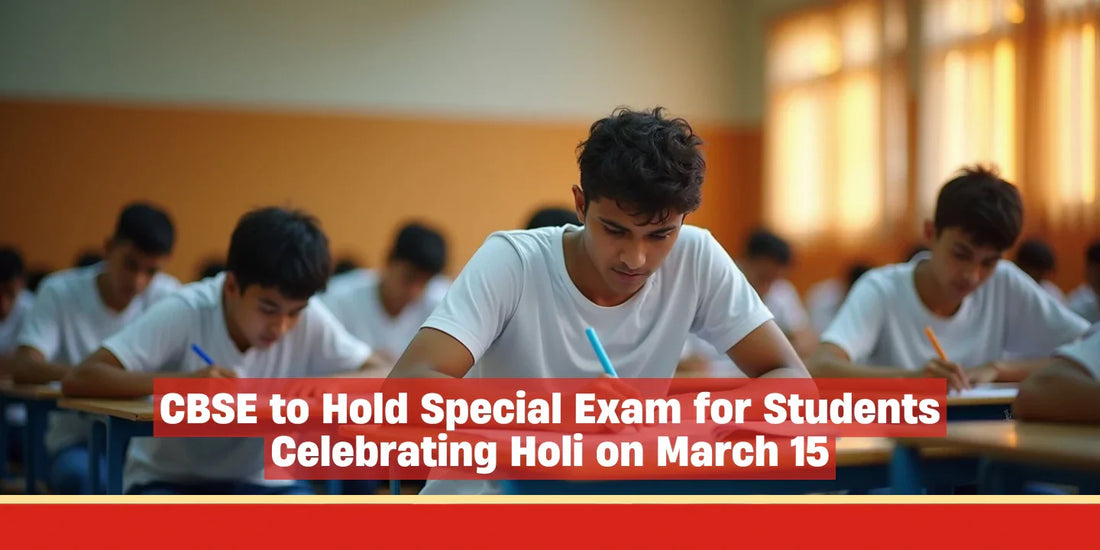
The Central Board of Secondary Education (CBSE) has once again demonstrated its student-friendly approach by announcing a special exam option for those unable to attend their board exams due to Holi celebrations. The decision comes in response to overlapping schedules between the Class 12 Hindi exam and the festival of Holi, which falls on March 14 and 15, 2025, depending on regional calendars.
This initiative ensures that students celebrating the festival will not be penalized or forced to choose between cultural traditions and academic obligations. For a country as diverse as India, this move acknowledges the importance of balancing education with cultural participation.
At Chate Coaching Classes, we believe this decision reflects CBSE’s evolving commitment to inclusivity, flexibility, and student well-being. Let’s explore the details of this announcement, its impact on students, and what it reveals about the changing landscape of Indian education.
Understanding the Announcement
In an official circular, CBSE confirmed that students unable to appear for the March 15 board exam due to Holi celebrations will be allowed to take a special examination on a later date.
The affected exams include:
- Class 12 Hindi Core (302)
- Class 12 Hindi Elective (002)
While the rest of the Class 12 exams will continue until April 2, 2025, this particular decision addresses a unique timing conflict. Class 10 exams, meanwhile, are expected to conclude by March 18, 2025.
CBSE’s notification read:
“While the examination will be held on 15.03.2025, students who find it difficult to appear may decide not to take the test. They will get a chance to take a special exam as per CBSE policy.”
Although detailed instructions on registration for the special exam are yet to be released, the move highlights CBSE’s proactive planning to accommodate students across different states where Holi is celebrated over two days.
Why the Special Exam Policy Matters
This is not the first time CBSE has extended such flexibility. Previously, the board has allowed students to take special or rescheduled exams under certain circumstances, such as representing India in national or international sports events, participating in Olympiads, or facing medical emergencies.
However, the 2025 policy stands out because it recognizes cultural and religious observances as valid grounds for accommodation. Holi is a major festival celebrated across India, symbolizing unity, joy, and renewal. In many regions, festivities continue through Rang Panchami or Dhulandi, making it difficult for students to attend exams scheduled during these dates.
By providing a special exam, CBSE ensures that:
- Students do not face attendance penalties.
- Cultural participation is respected and protected.
- Academic fairness is maintained through equal opportunity.
This marks a step forward in making the Indian education system more empathetic and adaptable to regional diversity.
Who Can Apply for the Special Exam
According to the CBSE circular, the special exam option is open to:
- Class 12 students appearing for Hindi Core (302) or Hindi Elective (002) papers.
- Students residing in regions where Holi is officially celebrated on March 15, 2025, such as certain parts of Uttar Pradesh, Bihar, Madhya Pradesh, Rajasthan, and Chhattisgarh.
The special exam will be scheduled after the completion of regular board exams, ensuring minimal disruption to the overall schedule.
Further details, including the application process and exact dates, will be released soon on the official CBSE website (cbse.gov.in). Schools will also receive instructions for verifying eligible students and assisting them in registration.
How This Policy Reflects CBSE’s New Direction
The National Education Policy (NEP) 2020 has encouraged Indian education boards to move toward a more student-centered approach. CBSE’s Holi exam decision aligns perfectly with that vision by acknowledging students’ emotional, cultural, and social needs alongside academics.
This reform highlights four key values:
-
Inclusivity:
Recognizing India’s cultural diversity and religious practices in educational planning. -
Flexibility:
Allowing students to manage both academic and personal commitments without stress. -
Empathy:
Demonstrating awareness that festivals are integral to students’ family and community lives. -
Fairness:
Ensuring no student is disadvantaged due to regional variations in holidays or celebrations.
Through policies like this, CBSE reinforces that education is not just about exams but about nurturing balanced, emotionally intelligent individuals.
Student Reactions
Early responses from students and parents have been overwhelmingly positive. Many have expressed relief that they can enjoy Holi without compromising their board exam performance.
Some Class 12 students from northern states shared that the announcement reduced anxiety and confusion over whether to skip Holi celebrations or risk missing an important exam. Parents, too, appreciated CBSE’s sensitivity to cultural realities.
Teachers also believe this decision will help reduce absenteeism and encourage students to perform better. According to educators, exams conducted during festivals often lead to lower concentration and emotional stress. This policy effectively removes that barrier.
Parental Perspective
Parents play a crucial role during the board exam period, helping students manage schedules and stress. Traditionally, when exams coincide with festivals, families face a difficult dilemma. Many parents in Holi-celebrating regions have expressed gratitude toward CBSE’s decision, calling it “a long-awaited reform.”
A parent from Kanpur stated:
“Holi is about family, community, and joy. Forcing students to stay away for exams defeats the spirit of the festival. This is a balanced and humane decision by CBSE.”
Such sentiments highlight how the policy strengthens trust between schools, families, and the education board.
Educational Expert Opinions
Education experts see this as a progressive policy shift. They believe that acknowledging cultural diversity in academic scheduling promotes inclusivity and emotional well-being among students.
According to Dr. Meera Bhattacharya, an educational psychologist,
“Students perform better academically when their emotional and cultural needs are respected. The CBSE’s move sets a healthy precedent for other boards to follow.”
Experts also predict that such policies will pave the way for localized flexibility, where regional education boards can adjust exam schedules based on state-specific holidays without compromising academic standards.
How Chate Coaching Classes Supports Students
At Chate Coaching Classes, we fully support CBSE’s decision and stand by students preparing for the 2025 board exams. Our goal has always been to help students manage time effectively, stay stress-free, and perform their best, regardless of schedule challenges.
To assist students during this period, we will:
- Provide adjusted mock test schedules around Holi for Class 12 Hindi students.
- Offer one-on-one guidance for those applying for the special exam.
- Conduct revision sessions after the festival to ensure smooth continuity.
- Share official updates on CBSE notifications and application procedures as soon as they are released.
By combining flexibility with preparation, Chate Coaching Classes ensures that students can enjoy their cultural celebrations and still achieve academic success.
Impact on the Broader Education System
The Holi exam decision could signal the beginning of a more culturally responsive education system in India. If implemented successfully, it could inspire other education boards and universities to consider similar accommodations during major regional or religious festivals.
Potential long-term impacts include:
- Improved Student Mental Health: Reducing conflict between personal and academic responsibilities.
- Better Attendance Rates: Fewer absences due to festival-related conflicts.
- Enhanced Community Trust: Greater cooperation between schools, families, and educational authorities.
- Cultural Preservation: Encouraging students to stay connected to traditions without academic guilt.
This marks a welcome change where academic calendars are designed around human needs rather than rigid systems.
What Students Should Do Next
If you are a Class 12 student appearing for the Hindi Core or Elective paper, here’s what you should keep in mind:
-
Check Local Holiday Announcements:
Confirm whether Holi in your region falls on March 14 or 15. -
Stay Updated with CBSE Notices:
Visit cbse.gov.in regularly for the official circular about special exam registration. -
Inform Your School Early:
If you plan to opt for the special exam, notify your school administration in advance so they can guide you through the process. -
Do Not Panic:
Whether you attend the March 15 exam or the later one, both will be treated equally. The syllabus, marking scheme, and difficulty level will remain the same. -
Continue Preparation Consistently:
Even with this flexibility, maintain your study schedule. Chate Coaching Classes recommends continuing daily revision and mock tests to stay confident.
Conclusion
The CBSE’s decision to hold a special exam for students celebrating Holi is a forward-thinking move that reflects compassion, flexibility, and cultural awareness. It sends a strong message that academic success and cultural traditions can coexist harmoniously.
This reform not only reduces stress but also celebrates the spirit of India’s diversity. As students prepare for their Class 10 and 12 board exams, they can now focus on both learning and living fully.
At Chate Coaching Classes, we applaud this change and remain dedicated to supporting every student through structured study plans, festival-friendly timetables, and expert mentorship. Education should never come at the cost of culture, and this CBSE initiative is a perfect example of balance done right.


